


Are you looking to add a burst of colour and continuous blooms to your garden planters? Look no further than the technique of bulb layering, often referred to as “bulb lasagne”. This popular gardening method allows you to maximise space in your planters while ensuring a steady stream of flowers throughout the seasons.
What is Bulb Layering?
Bulb layering involves planting bulbs of different varieties in layers within a single planter. By staggering the planting depths and bloom times, you can achieve a stunning display of flowers that bloom successively, providing continuous colour and interest in your garden.

Choosing the Right Bulbs
When selecting bulbs for your layered planter, consider varieties that complement each other in terms of height, colour, and bloom time. Popular choices include:
- Early Spring Bulbs: Crocuses, snowdrops, and early tulips are excellent choices for the top layer. These bulbs will bloom first, usually in late winter to early spring, providing a cheerful splash of colour to kickstart the gardening season.

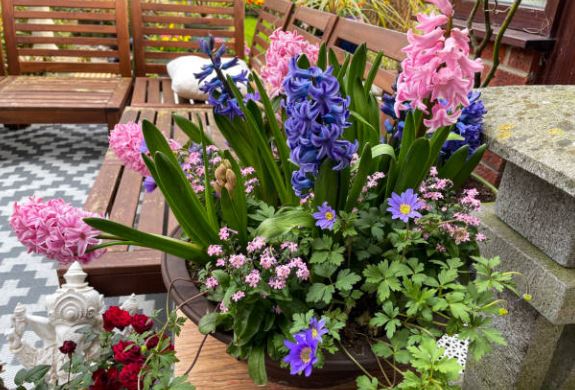
- Mid-Spring Bulbs: Daffodils, hyacinths, and mid-season tulips can be planted in the middle layer. These bulbs will follow the early bloomers, extending the flowering period into mid-spring.

- Late Spring/Early Summer Bulbs: Consider planting bulbs such as alliums, late tulips, and fritillaries in the bottom layer. These bulbs will bloom later in the season, ensuring your planter remains vibrant well into early summer.

Planting Depths
Ensure your planter receives adequate sunlight according to the needs of the bulbs you’ve chosen. Most bulbs prefer full sun to partial shade. When planting, follow these general guidelines for bulb depth:
- Top Layer: Plant bulbs at a depth equal to about twice their height. For example, if a crocus bulb is 2 inches tall (5 cm), plant it approximately 4 inches deep (10cm).
- Middle Layer: Plant bulbs slightly deeper, around three times their height. For instance, a daffodil bulb that is 3 inches tall (7cm) should be planted approximately 9 inches deep (24 cm).
- Bottom Layer: Plant bulbs at the deepest depth, around four times their height. For instance, if you have allium bulbs that are 4 inches tall (10 cm), plant them approximately 16 inches deep (40 cm).
Ensuring the proper planting depths for each layer will promote healthy root development and optimal blooming, resulting in a stunning display of flowers throughout the seasons.

Soil & Planting Technique
Use a well-draining potting mix enriched with organic matter to provide the best growing conditions for your bulbs. Layer the bulbs in the planter according to their planting depth, starting with the deepest layer at the bottom and working your way up. Ensure each layer is evenly spaced and covered with soil before adding the next layer.
Companion Flowers
To enhance the beauty of your layered bulb planter, consider planting companion flowers that complement the blooms. Some great options include:
- Pansies: These colourful annuals can be planted alongside early spring bulbs for added interest.
- Forget-Me-Nots: Their delicate blue flowers make a charming addition to mid-spring bulb displays.
- Lavender: Plant alongside late spring bulbs for a fragrant and visually appealing combination.
Maintenance Tips
- Water your layered bulb planter regularly, keeping the soil evenly moist but not waterlogged.
- Deadhead old blooms to encourage continued flowering.
- Fertilise periodically with a balanced, slow-release fertiliser to promote healthy growth.
Selecting Adequate Planters
Choosing the right planters with sufficient depth is essential to accommodate the layered planting technique effectively. For a successful bulb lasagne, opt for planters that provide enough space for the different layers of bulbs to be planted at their recommended depths.
Ideally, select planters with a depth of at least 12-16 inches (30-40 centimeters) to accommodate the varying planting depths of the bulbs. This depth allows for proper root development and ample soil volume to support the growth and blooming of the bulbs throughout the seasons. Additionally, ensure that the planters have adequate drainage holes to prevent waterlogging, which can lead to bulb rot.
Investing in planters of the appropriate depth will help you create a beautiful and flourishing layered bulb planters that will be the envy of your garden.
 Large Garden Planters